
USCA: Forty Years of Subservience and Stagnation
Jim Engel, March 2018
For forty years the United Schutzhund Clubs of America (USCA) has struggled to be relevant, to enter the mainstream of American life, to rise above marginalization. This has not been a matter of competition with other venues or organizations, for in terms of participation, prestige and prominence it has far outstripped the various Ring Sport entities, other IPO organizations such as DVG and AWMA and fledgling American efforts such as PSA. Glossary
There have of course been areas of advancement and progress. The current leadership, much to their credit, has brought stability and relative tranquility after an era of strife with competing American GSD organizations, the judges program has provided Americans on a par with any in the world, and endemic internal strife and conflict has been brought largely under control. All to the good.

This has not come to pass and the reality may be that we are simply in denial, that it never really was possible, that we began too late, that time had passed us by. But for me the unfulfilled forty year old dream is impossible to relinquish, settling for less would be worse than never having strived at all, would be to deny the validity of the vision. But as Einstein reminded us the definition of insanity is doing the same thing over and over again, but expecting different results. If this stagnation, this drift into triviality, is to abate than we must change direction, identify and establish a new paradigm.
External obstacles include the disengagement of younger people permanently attached to their iPhones and struggling to establish lives and homes in an era of wage stagnation and sparse entry level employment opportunities, the enormous time sucking effect of electronic media in general, the sheer physical size of the nation, the escalating cost of helper assistance and the decline of the purebred dog paradigm in general, as exemplified by plummeting AKC and SV registrations.
But the overriding obstacle has been the failure to reach critical mass in terms of density, that is to establish a network of amateur clubs close enough together so that local opportunities are at hand as interest emerges. At almost exactly four clubs per state nationally most Americans find access difficult and expensive in terms of time and money, and the alternative of founding a local club is daunting for the novice. This dilemma has been our Achilles heel for forty years. Starting up by pulling on the bootstraps is difficult because there is so much to learn, so many skills to master, a lack of capable helpers and instructors. The culture grew up in Europe over a century, one generation mentoring the next, but it turns out to be incredibly difficult to recreate this out of whole cloth, especially in an era with so many other entertainment venues and distractions.
These are enormous, perhaps insoluble, obstacles. But a major aspect of the problem is systemic, stagnation from within, a loss of focus on fundamental foundation values, as eloquently put forth on the USCA web site:
Schutzhund was developed in Germany in the early 1900s as a breed suitability test for the German Shepherd Dog. It was designed to test the natural instincts of the breed and to weed out the dogs that were either unstable or untrainable. This helped ensure that breeding stock would pass on the most desirable trait. USCA Link
This focus on certifying breeding suitability has to a large extent been marginalized in favor of winning on the sport field and the emergence of a professional based infrastructure driven by the profit motive. Rather than fostering American breeding, family oriented training venues and establishment of American lines of viable police, military and personal Shepherds, a noble service to the larger American community, the organization has been subverted into focus on dogs as little more than sports equipment and profit opportunity for the professional elites. Rather than breeding and training their own dogs, establishing a line and building a heritage, the focus for many is on finding a dog, any dog, often trained and titled abroad, out of German lines as a means of personal gratification and notoriety, sometimes discarding the dog when his usefulness is at an end. Somehow making a world team, waving a cup or perhaps a placement in Europe have become ends in and of themselves rather than incidental occasions of recognition in the course of truly important things of intrinsic merit and value such as contribution to the long term viability of a worthy breed or a flourishing, ongoing training and breeding community.
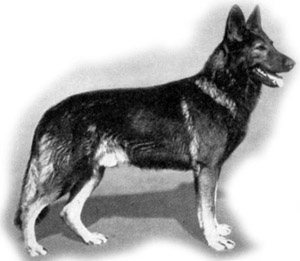
Significantly aggravating this trend has been the ongoing erosion of SV commitment to real working character, Germans gutting the Schutzhund trial as it evolved into IPO and passing off responsibility for and control of the working foundation of the breed to the pet, show and money oriented FCI bureaucrats. This should not be especially surprising in that pet, show and money oriented perfectly describes the SV leadership of recent decades. Thus the marginalization of the trial as a breeding suitability verification— mentioned above in relation to USCA—has its root causes in SV hypocrisy, the fact that IPO titles are routinely given to grossly unfit SV show dogs by corrupt judges diminishes the credibility of not only the dog and subsequent progeny, but more importantly the credibility of the SV and ultimately the breed itself. The problem is of course that the titles obtained under honest judges and correct trial helpers by diligent, committed trainers and breeders are essentially meaningless, that the entire system is founded on a massive fraud, an ongoing scam. It is grossly unfair, but it is reality.
This is a serious problem beyond the endemic breeding of grossly inadequate SV show dogs with fraudulent credentials, for once the novice club level trainer perceives this the motivation to strive diminishes because his or her title, no matter how thoroughly merited, no matter how correct and honest judge and helper are on trial day, no matter how strong the performance of the dog, the title means essentially nothing because the same title is routinely given away to so many undeserving dogs. This is the root cause of the decline of the SV and will in time extinguish the breed as envisioned by the founders if not corrected.
Thus if USCA is going to seriously support the German Shepherd as a working dog in North America they are going to have to grow up, put on their big boy pants and realize that the SV is not their mother organization, it is the root of their existential problem, and more importantly the ongoing threat to the viability and vitality of the breed worldwide. In saying this I emphasize once again that USCA leadership is today to the best of my knowledge honest, sincere and diligent, and that they understand these things perfectly well but are constrained by the SV strangle hold, made possible by the fact that for forty years they have played us off against the GSDCA, which essentially is a dog in the manger with no skin in the game, to interfere in and manipulate to their benefit American affairs. There was a time when USCA leadership was corrupt and self-serving, but to my knowledge this is not the case today; the purpose here is to put these issues before the rank and file so that when the time comes to take action there will be understanding and support; what is presented here is nothing more than what USCA leadership and all experienced, discerning people know perfectly well.
This desecration of the German Shepherd by the SV, this squandering of their patrimony, is a primary causative factor in the ongoing decline worldwide. In stating this let me be perfectly clear: there is no question that most of the dogs doing well in the USCA nationals and in Euro events such as the FCI and World Union are remarkably solid, strong dogs, a credit to their breeders and trainers by any standard of today or yesterday. But this is not in any way a credit to the SV or the IPO trial as it exists and is judged in Germany today, most especially as regards the show lines. These quality dogs exist in spite of SV perversity because generations of hard core German breeders and trainers maintained and continue to carry on their own personal standards of integrity, have remained fully faithful to the heritage. My strong belief is that the IPO trial as it exists is a disservice to these dogs and these trainers, that it is not sufficiently demanding to showcase their true quality, that many or most of them would shine in a more inherently demanding trial, much more fully exhibit their vigor, courage and working willingness and the quality of their training. These lines and this heritage is of enormous value, which is why we must have the courage to address these issues.
Furthermore a more demanding and comprehensive trial would be more interesting and compelling from a spectator point of view. Today most of the performances superficially appear more or less identical to the casual viewer not intimately familiar with the fine points which separate winners and losers, the general public in which we would like to create interest, respect and appreciation. More demanding and elaborate exercises would be more dramatic and interesting, put a spot light on the best dogs and the sport.
The fundamental problem is in the SV, which has responded to the ongoing rejection of the breed, after a century of spectacular success, by the German people—with puppy registrations falling from 30,000 annually in the mid 90's to about 10,000 today, a two thirds drop—by breeding even more physically grotesque dogs and allowing even lower standards in the trials, deemphasizing the historical working character of the breed. They have sought to stem the flow of blood by abandoning the police and military oriented culture in favor of what are in their view more popular, less demanding activities such as agility and rally. They seem oblivious to the fact that the original appeal of the breed was the robust character and physique, capable of strong aggression when called upon yet stable and reliable when properly trained and managed. But evolving the GSD into a crippled Golden or Labrador retriever—breeds both incidentally with increasing popularity in Germany—is squandering their heritage, their patrimony.
In summary the vigorous and correct German Shepherds, those being bred and trained according to the founding tradition and culture, are world class by any standard, but an increasingly smaller portion of the breed as a whole either here or anyplace in Europe. The problem is that these inadequate dogs come to be taken for the norm, that the image and perception of the traditional breeding is diminished by the pathetic caricatures that the SV proliferates. The GSD is losing ground to the Malinois in police and military service and while healthy competition is a good thing for both breeds, providing options for those seeking the best possible dogs for service, this weakness in the SV leadership is eroding confidence among those seeking dogs for police and military service.
Evolution of breeding oriented Schutzhund into play sport IPO has changed the focus from the dog to the handler, to the detriment of the vigor of the breed. The ideal breeding test would focus on the dog, with the results being more or less the same regardless of the skill or dedication of the handler. This does not refer to the extreme of the so called temperament tests for supposedly untrained dogs, for trainability and working willingness are inherent attributes of a good dog, and can only be demonstrated and appreciated through comprehensive training. But the content of the exercises and the evaluation criteria must relate directly to the inherent real world working environment potential of the dog rather than irrelevant considerations of style in execution. These style sport criteria have evolved to differentiate between increasingly good training in the sense of rote performance, and have more and more detracted from the trial as an effective evaluation of the actual working potential of the dog, which demands much beyond rote performance in terms of situational awareness and instinctive reaction to unscripted threat.
From the beginning the price of access to SV working judges and perceived credibility was the forced conversion of USCA into the US based marketing operation for increasingly pathetic SV show dogs; USCA in effect was metamorphosed into SV Sales America, GmbH. Not only did we to a large extent lose control of American working dog affairs, we found ourselves financing and abetting the invasion of these embarrassing banana backed monstrosities. In this way hypocrisy became the public persona of USCA, for a working dog organization that becomes a venue for promoting and pandering such dogs relinquishes any shred of credibility or expectation of respect, and lack of credibility leads directly to lack of growth. Thus subversion by the SV and enforced promotion of their fraudulent show dogs enormously diminishes the credibility of USCA and thus is a major factor in the stagnation we see before us.
The aggregate result of these trends has been more and more focus on winning at any price, individual sport placement as the overriding priority, in terms of personal achievement and organizational allocation of resources, to the exclusion of an Americanization of the provision of working police and military stock on a national level and training and recreational opportunities for less driven rank and file amateur enthusiasts with other, competing priorities in their lives.
There is nothing especially unusual in encouraging and supporting international canine competition in ways similar to the various programs to identify, encourage and support high level Olympic candidates to the exclusion of those with more pedestrian potential, the promotion and glorification of the elite. But the recent scandals at Michigan State and the NCAA involving ongoing sexual assault on vulnerable aspiring gymnasts does however provide stark warning of the dangers inherent in an endemic win at any price culture. Many would question our priorities, wonder if in the aggregate it is of benefit to all of the participants, the vast majority of which fall by the wayside in the unrelenting pursuit of gold, if in abandoning the amateur spirit we have lost something of value.
Where is the line between competitiveness and rank hypocrisy, pretense of concern for an individual dog or breed on any level beyond sports equipment, where the priority is on money for the professionals and cup waving for the elite amateurs? If this is to be what it is, then transparency would surely require acknowledging reality and renaming USCA as PIA—Professional IPO Association—because IPO is not Schutzhund and the concept of clubs implies an amateur rather than a professional foundation.
This all-consuming obsession with high level competition, to the detriment and neglect of building at the amateur grass roots level, is an existential causative factor in the stagnation of USCA. The novice quickly comes to understand that beyond the club level competition is on much less than a level playing field, that those he meets at higher levels will be full time professionals, with virtually unlimited access to quality training helpers, whose livelihood depends on winning at any cost and well off amateurs with the financial, emotional and time resources to make a professional level commitment. Thus many working and middle class people with limitations and priorities in terms of family obligations will tend to drop out in face of these limitations. This is in stark contrast to the much more amateur orientation in Europe, and this high barrier in terms of time, travel and money is a fundamental reason, perhaps the fundamental reason, for our forty years of stagnation. But this elite group is self-limited in size because of the inherently limited market for professional training and handling services, such an organization is predestined to remain marginal, of little real significance.
Note that professionalism is not inherently a bad thing, when we engage a personal physician or dentist it is only common sense to seek out a person of the highest possible professional credentials, reputation and capability. Many professional trainers are competent, concerned, well intentioned people. (Others not so much, we could all submit our own list.) As a prime example Ivan Balabanov breeds and trains his own dogs from the ground up and consistently competes and succeeds at the highest level, and even more to the point his customers and students prosper, succeed and contribute. But the spirit and the foundation of the Euro culture we are trying to recreate is amateur domination, when amateur clubs are pushed out by what are in reality professionally operated commercial business establishments with no "member" being able to vote or have a say in "club" affairs, where as in all businesses money is the ultimate end then it precludes many working and middle class people and most especially much of the younger generation with family obligations and limited cash available for discretionary avocational spending.
USCA will stagnate as long as these circumstances prevail, which means more or less forever if the people by and for whom it is run become comfortable with a one dimensional focus on making the Euro team, whether their motivation is the money for the professional or the cup waving opportunities for the dilettantes.
In order to emerge from stagnation we must:
- Break free of SV subservience, especially the promotion of SV show dogs.
- Return to a program based on the spirit of the Schutzhund trial of forty years ago, modernized to incorporate current real world police and military requirements.
- Return to our working roots with emphasis on qualities that directly relate to real world duel role police service and military applications.
- Emphasize amateur, family oriented training venues in order to encourage participation of younger people.
- Focus on establishment of American lines of viable police, military and personal working dogs, becoming a real service to our nation and local communities.
- Limit national and international competition to dogs born and bred in America, something that all Americans could relate to and be proud of.
Exclusively American born and bred dogs on the international stage would be a ringing declaration of independence, an emergence from a century of subservience, a coming of age as a legitimate presence in the world community. Rather than German dogs being sent home to pay homage to colonial overlords representation by our own dogs, born and bred here, would bring us to the threshold of maturity, a truly American working culture. Philips and Floyd have cast down the gauntlet, demonstrated that at our best we can be the equal to any in the world. Taking the leap into maturity would require courage and confidence, there would perhaps be fewer competitive teams in the short term, but this would be transient, soon augmented by the fruit of a reinvigorated, maturing American breeding and training community. All that is required is the courage to grow up and make the commitment.
Exclusively American bred representation would ultimately diminish the predominance of the professionals whose leverage is based largely on imports, would do much to level the playing field. Younger Americans with the fire in their bellies but modest financial resources, family obligations, would have the incentive to find a young dog and work hard, confident that when trial day came the competition would be other strong amateurs on an equal footing rather than elite strangers with high priced imports with advanced titles and success on Euro sport fields.
The fly in this ointment is that by playing USCA against GSDCA the SV continues to hold the upper hand, preventing us from on a national level establishing our own standards, priorities, regulations and culture. Limiting foreign participation to American bred dogs as things stand now would merely make GSDCA the route to the international stage. The unfortunate reality is that until we break this corrupt strangle hold, this SV control, we will remain as a third rate nation in the working dog world, dependent on Europe for police and military dogs, increasingly Malinois because the SV is impeding even the most hard core Euro GSD trainers and breeders.
The mitigating factor is that not only is the SV corrupt, it is weak and grievously poorly led; they are on their own self-inflicted spiral to oblivion. If this progresses rapidly enough, or if serious independent German GSD organizations become viable, this breed can very well recover and prosper. The alternative would likely be a worldwide Malinois predominance, not a good thing in that healthy competition and alternatives benefit all of us.
Lead up to every revolution is a time of denial, good and responsible men confident that rationality and self-interest will prevail, will produce accommodation and compromise, that no one benefits from decent into open conflict. When revolution comes it is sudden, often in response to what are in reality trivial provocations. We live in such a time.
In the early years many of us were drawn to Schutzhund as an opportunity to participate in something of inherent worth, the preservation and propagation of noble lines and breeds of dogs as a cultural heritage, something of value for future generations, to be proud of in our later years. Our reward was to have been the satisfaction of seeing new generations which we had mentored breeding and training truly better dogs out of those we in our turn had bred, loved and trained, of real significance and service to our community and culture rather than just a shelf of dusty cups to surely be put on the curb by our children the morning after our funeral. But somehow these empty cups have become ends in and of themselves, proof of relentless commitment to the principle that winning is the only thing, the meaning of life.
We were so idealistic and naïve.
Jim Engel, Marengo © Copyright March 1,2018
Recent articles of interest:
Has Sport Subverted the Trial?Glossary of Organizations and Abreviations